LandRoverWriter.com

LandRoverWriter.com
The Land Rover Writer

Thursday, December 18, 2008

Britain Gets It Right

The government of Gordon Brown recognizes the importance of the automotive manufacturing industry to his country. Even though the number of British-based automobile companies is small, the number of plants - regardless of corporate ownership - is deemed important.

Jaguar and Land Rover are now a single company, owned by the Tata conglomerate in India. The merged corporate structure pays 15,000 workers a year; its collective impact on far more workers [sales, repair shops, parts manufacturers and retailers] is even larger.

Great Britain has led the world in seeking out effective solutions to the banking/lending crisis; indeed, it wasn't long after Secretary Paulson announced his $700 billion plan that the Brown government came up with an alternative plans. By all measures theirs has worked better than ours.

So I was not surprised to read that when Jaguar and Land Rover found that they needed support in this difficult automotive environment, their government listened and indeed appears ready to act. Meanwhile, Washington continues to suck air as it approaches the end of December - when GM and Chrysler will run out of funds.

Wednesday, December 17, 2008

So You Think That Detroit was Faking It?

So you - yes, you, Senate southern Republicans - think that Detroit is faking their financial distress? I don't thnk so.

You see, according to the Assoicated Press, all 30 Chrysler plants in the US will shut down this Friday and remain closed until January 19. That's a great way to conserve funds and reduce inventory. Of course, a lot of auto workers, blue collar and white collar, will no longer have the same paycheck or will go on unemployment. That should do wonders from strapped state unenployment funds.

Well, good thing that the Senate Republicans refused to be bamboozled by those Big 3 CEO's.

Tuesday, December 16, 2008

Small Cars = Cheap Cars: Only in Detroit

Over the decades Detroit manufacturers have worked with the following equation: large cars = great cars, small cars = cheap cars. So no one really engineered or marketed a small car to be a great car.

Well, actually, by accident, Chevrolet did when they created my beloved Corvair. Without realizing it they made the Corvair a far better car - unibody, low stressed air cooled engine, superb styling in either early or late guise, great seating capacity - than other "compacts." But at the same time, they sought to sell it on low price alone. So the interiors were cheezy, a passenger side sun visor and heater were optional, marketing was aimed at economy, build quality in the later models was appalling, even by '60's standards, and so on.

But European manufacturers long ago recognized that the laws of physics affect automobiles, too. So why not make an elegant, superbly designed small car? They used the registration and tax laws to their advantage. If gas taxes are quite high [now about $3.80 per gallon according to the Boston Globe], why not make engines fuel efficient? Why not make 4-5-6 speed transmissions so those same engines can propel the cars to autobahn speeds? Since they'll be going much faster than Americans do on their highways, we'd better give them great suspensions and handling packages. And Europeans are less likely to own multiple cars so they made them with higher quality so they would last.

The European models that could not make it in the US were the Renault Dauphines and Fiat 500's, the economy cars with tiny engines [<1>

Monday, December 15, 2008

After the Bailout

Thomas Friedman, the author and New York Times columnist, got it right in a recent column.

He wrote that "over the years Detroit bosses kept repeating: 'We have to make cars that people want.' That's why they're in trouble. Their job is to make the cars people don't know they want but will buy like crazy when they see them [italics from original article].

If Detroit's management recognizes the validity here, they could begin the rebirth after the bailout. When was the last time you turned to a Detroit-designed and engineered car and proclaimed, "I must have one of those!" Many is the time buyers have said "I must have a new car" and turned to other marques for their choice. Or worse yet for Detroit, they've said "show me you lowest price or best lease deal." In effect "I'll rent this car for the next 2 - 7 years" instead of investing in ownership.

If hybrid cars are your thing, a Chinese manufacturer now sells a $22,000 plug-in hybrid that will get 80 miles range on a charge and then a gas engine kicks in. For a lot of driving situations every day, 80 miles will be enough to run on electricity alone.

If, as I do, you live in northern New England, where power outages from ice and snow and wind storms are all too common, you might want to hold on the "plug in" until the electrical grid is more robust. That said, for fans in China they now have a car that they feel as though "they must have." So how come GM can't get the Volt out until at least 2010?

As Friedman wrote in yestersday's Sunday New York Times, "Walk through a lot of college campuses. You don't see many Buicks." Memo to GM: your future buyers, the ones who will fund your bailout through their taxes and lost savings, aren't interested in the marque you've identified as part of your "core product line.'

Friday, December 12, 2008

City to Ford: Drop Dead

In 1975, the New York Post paraphrased President Gerald Ford's decision not to provide federal bailout assistance to New York as "Ford to City: Drop Dead."

So today, we can paraphrase Washington's decision [thank you, Senate Republican leadership] not to assist the Detroit automakers as "City to Ford: Drop Dead."

What a great boost to the economies of states with automotive-related industries, worker income taxes, auto excise taxes, sales taxes, dealerships - any states come to mind, like yours?

Thursday, December 11, 2008

Senate Republicans Fiddle While Detroit Burns

I took the ferry to the mainland from this Maine island this morning but made it home this afternoon to note that the Senate Republicans have decided to defy their President, the House of Representatives, and a wide array of economists and Wall St. experts. The bailout bill for GM and Chrysler [and Ford if they need it] looks doomed.

What's fascinating here is the hypocrisy. Senators from states that have offered huge incentives for foreign manufacturers to establish factories there refuse to assist American-based companies whose factories happen to be in other states. Maine's two Republican Senators have appropriately asked lots of questions and demand accountability, but they have not yet sounded nonsensical.

What part of "one nation" don't they understand? Maybe one of them can explain just why throwing hundreds of thousands of new people out of work is such a great idea?

Wednesday, December 10, 2008

Bailout on the Way

Interesting that Senators from southern states - those that have subsidized foreign manufacturers with generous tax incentives - are opposing the bailout of US-based firms. You know I'm a critic of those companies, but I believe that it's time for opponents in the Senate to be more honest.

Bob Lutz and GM ["Great Management"]

I just read a newspaper account of how Bob Lutz, GM's Vice-Chairman of the Board, insists that the current management of GM is "not the problem." Hmm... let me think about this.

Lutz may be right because the GM Board is the problem. Rick Waggoner may be the perfect leader for GM as it is currently constituted - indeed, as it has been constituted for decades. He clearly takes a lot of the heat off the Board and comforts them with his language and actions. What he has not done -with the full support of the GM Board - is produce automobiles that make me want to buy from GM.

GM has a long list of constituents it blames for the precipitous drop in sales: dealers [too many], credit sources [people can't get loans], the general economy and yes, themselves [yes, maybe we built too many pickups and SUV's for the past decade]. Deflectiing blame is not the hallmark of an exciting automobile company.

Too many dealers? You signed them up. Investors would not have signed on is they did not think they had a market. Customers bought cars from them. GM mandated minimum sales numbers for inventory - so who's to blame here? The same investors often own multiple dealerships with GM and "import" brands. It's not the handsome building that sells a car, it's the car itself. Dealer service tied up in warranty claims does not make for a happy customer -right?

And don't take any pride in the J. D. Powers ranking of Buick for quality; their models have been the same boring cars for 5-8 years. Of course they're good - you've had time to get it right. But what it you got it right at the start? I got a ride in a Chevy Impala the other day from a diehard Chevy fan, a vet from upstate New York. He's a tall guy and he fit nicely into the car. It was competant but nothing, absoutely nothing, made me forget the awful Impala and Malbu of 2 years ago that I rented. Yes, I know they've changed, but not once underway.

Corporate boards hold management accountable in several ways, and dividend checks and stock valuations are only one measure. When you look down the pike and you hear only 1 model, the elusive and now very unappealing Chevy Volt, touted as your savior, what does that tell you? The failure of GM's management is to produce excitement around their automobiles and trucks.

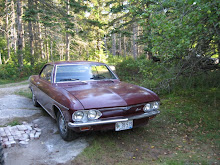
I still have and drive routinely, ini all weather, a 1966 Corvair Monza Coupe. It is a joy to get behind the wheel, no matter how short the drive. I wish I had reasons to drive further whenever I'm in it. Get it? I look for an excuse to drive the car!!! There's nothing in the GM lineup right now - even the Corvette - that makes me want to do that. When I need a truck, I use my '66 Land Rover because it is true to the philosophy behind work vehicles - GM's trucks are not. Local fishermen have to search out genuine work trucks from Chevy The options considered vital on passenger cars mean nothing to them. And they'd be very happy to pay less for less standard equipment, too.

These are failures of leadership, from the Board on down to management. The GM system simply does not work anymore. Now don't get me started on Chrysler and Ford.

History Lesson

Thomas Trimarco worked for the Department of Transportation in the 1970's and in a column in today's Boston Globe, he remembers attending a meeting with the Big Three representatives about the looming disconnect between US market share and impending dangers to our oil supply. The column is here.

The lesson he took away from that meeting was "these management misfits have created a big mess. They have created an unsustainable business model. And our current generation may yet witness the most tremendous failure any industry has experienced in US history. But it should come as little surprise. The arrogance of the Big Three is institutional, and historical."

What prompted his anger was an ad for the Cadillac Escalade hybrid, which if you drive it very, very carefully will eek out 20 mpg.

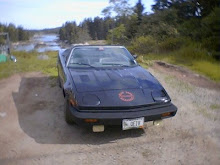
My 1966 Corvair Monza Coupe 110/4 speed achieves 27 mp on highway trips at 70 mph with 121,000 miles on the engine. A member of a national Corvair forum posted an issue of a 1965 Popular Mechanics, which also included a road test of a Fiat 1100D Station Wagon. That car, which would cruise at 65 mph all day, posted 37 mpg. My 1966 Land Rover, with an engine design created in the 1950's, gets 19 mpg at 70 mph. Oh yes, it has over 500,000 miles on the car, over 300,000 on its current engine. My 1980 Triumph TR-7 Spider, a twin carb car hardly built for mileage economy, gets 25 mpg at 75 mph.The car has 108,000 miles on the engine.

Meanwhile, Detroit based manufacturers seem to build cars in Europe that meet consumer needs and account for the decrease in sales due to the worldwide recession. Of course, they're not available in the US - even though they could actually be designed to meet both sets of EU and US certifications. Maybe the US ought to simply adopt the EU standards?

What's standing in the way? History and institutional patterns, encased in the Board of Directors at the Big 3.

What To Do With $15 or $35 Billion?

According to the FTC's most recent information, the average cost of a new car in the US is $28,400. Now that's from the NADA, so it's probably on the high side, but let's use it for now.

Instead of giving the US-based auto companies $15 billion right now as a cash infusion, what if instead, you simply gave each person who needed/wanted a new car or truck $28,400? That would provide sales of 528,169 cars and trucks right away.

If you said that a reasonable number of people can afford some car payments, but lack the down payment to meet new credit requirements, then you might instead provide a 25 % down payment to each person who needs or wants a new car. $7,100 per purchaser would enable the sale of 2,112,676 new cars and trucks.

And if we decide the forward the entire $35 billion last requested, well a $7,100 down payment would enable the sale of 4,929,577 new cars and trucks. The funds required for the credit required to implement these sales could come from the $700 billion bailout to our banking system - which seems very reluctant to loan funds to consumers at this time.

The sale of these cars would also get a lot of older, less efficient, slightly more polluting cars off the road. Since the '90's were the decade of SUV and large pickup sales, you could move more people into cars and smaller vehicles. The median age of all cars in the US is ow 9 years.

The resulting sales spurt would also benefit the companies that supply products to manufacturers, auto dealerships, parts and service retailers and give automotive magazines a lot to write about. It would also make it far more likely that more of the $35 billion could actually be paid back to the federal government.

Or instead, we can provide the funds directly to the manufacturers and their Board of Directors to decide what to do - which interests you the most?