
Just like Land Rover, ownership of Jeep has become a sort of holy grail for automobile companies. Regardless of the corporate parent, the two marques seem to "Carry On, Jeeves," with their own enthusiasts bolstering sales and building brand awareness.
Now the rumors abound that Renault, and its partner Nissan, are toying with making a bid for Jeep from Chrysler. This will complete a circle.
Renault once sold a lot of cars here, with the Dauphine model in the '60's, but it's propensity to overheat and blow head gaskets reduced sales over time. Even though the cars got a lot better - the Renault 5, 12, 16, 17, 18, Fuego - and sold very well in Europe, they just did not capture American hearts. By the '70's, Renault was hiring USAC race drivers like Bobby and Al Unser for tv and print ads extolling the virtues of the Renault 12. In the '80's, Renault bought up the remnants of American Motors, which included Jeep.
One problem for Renault was the dealer network, a small collection of out-of-the-way dealers in smaller markets. When they showed up in major cities the dealers combined them with other makes; they rarely showed up in stand-alone locations. Renault had visions of American Motors dealers now selling Renaults, Jeeps, and the remaining line of American Motors, the Eagle.
Eventually Renault produced the Alliance and the Encore, two cars oriented to the American market. They sold in modest numbers but never broke through. Eventually Renault sold off the remaining American Motors assets - and Jeep - to Chrysler.
The opportunities presented by Jeep - like Land Rover - to larger manufacturers lie in their name recognition, established technology, enthusiast base, and name recognition. It's very alluring to a succession of owners; in recent decades, BMW, Ford and now Tata have adopted Land Rover.
Could there be some elan in Jeep's future? It would be interesting to see some of Nissan's successful engineering incorporating Jeep's 4WD experience. Renault rescued Nissan and made it successful again; maybe together they will work their magic on Jeep.
Wednesday, January 14, 2009


Sunday, January 11, 2009
The Other Side of Island Living


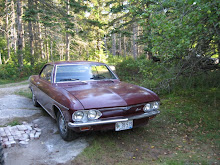
Yesterday the island received 8-10" of snow, depending on drifting. So that morning, I decided not to go to church and just work online, have a leisurely breakfast and enjoy watching the snow from the in front of the woodstove. Around 9:30, the snowfall thickened. I looked across the lane to the Corvair, covered with snow and a sort of sheen underneath it. How pretty, I thought.
I picked up a pair of binoculars and saw what caused the sheen - it was seawater!
I scanned the cove and realized that we had a wicked high tide. I thought about the huge full moon of last night, before the storm, and quickly went back online to my tide chart page. Holy *** - high tide was not for another hour and the height was extreme, 11.5 feet instead of the usual 9 feet. So much for relaxing.
Now I had to shovel out the Corvair , uncover it, start it [it has sat for the better part of this week], warm it up, and try and reverse it away from the water. The plows have not come yet so there was no other place to put it on the lane. Naturally, the seawater had mixed with the snow and frozen nice and slick. The car would not move very far.
So I went to the cellar when I store a tote of woodstove ash just for occasions like this, and spread some out underneath the rear wheels. That did the trick and I backed the car uphill just enough to avoid the water and yet not be in the way of the plow [there are no plows out yet anyway].
Just another complication of island living. Glad I didn't have to call FEMA.
Tuesday, January 6, 2009
Run Your Classic Car Everyday
There was a great article in the New York Times Sunday edition recently. A fellow from New Jersey really liked his late '70's Mercedes 300 D diesel. It ran wonderfully and it seemed to be built like a tank. So he kept his eyes open and wound up buying two more: one for his wife and one to keep at a vacation home in Vermont. They're similar cars from the late '70's-early 80's.
The owners says he's 50 years old which means he'll probably never have to buy another car in his lifetime. He sounds very pleased with his approach.
His total costs of purchase are less than a Nissan Versa. By virtue of age and original price, his registration fees/excise taxes and insurance are substantially less than they would be with new cars.
They have high mileage but as Mercedes diesels, they'll run for a long time. Parts support remains great so the cars are never tied up for parts. This is in sharp contrast to a friend's VW Jetta, which has sat at our local mechanics shop for 10 days waiting for the VW dealer on the mainland to actually get him a heater motor. You'd think that in New England, which has real winters, dealers would have adequate access to something as critical as a heater blower motor - not so.
With classic cars you give up many active aids to crash safety, so guess what - you have to drive with greater care. Classic cars have plenty of passive safety features built into their designs, but of course, they were designed during a time that it was assumed the whole idea of driving was avoiding accidents.
If you don't want to, or can't, work on them yourself, you'll help the national economy by moving parts [which then must be manufactured somewhere], keeping local mechanics employed, and actually buying something you can afford.
Think about it - now's the time to change and enjoy that classic car you've always wanted. If you have to drive, why not make it fun?
The owners says he's 50 years old which means he'll probably never have to buy another car in his lifetime. He sounds very pleased with his approach.
His total costs of purchase are less than a Nissan Versa. By virtue of age and original price, his registration fees/excise taxes and insurance are substantially less than they would be with new cars.
They have high mileage but as Mercedes diesels, they'll run for a long time. Parts support remains great so the cars are never tied up for parts. This is in sharp contrast to a friend's VW Jetta, which has sat at our local mechanics shop for 10 days waiting for the VW dealer on the mainland to actually get him a heater motor. You'd think that in New England, which has real winters, dealers would have adequate access to something as critical as a heater blower motor - not so.
With classic cars you give up many active aids to crash safety, so guess what - you have to drive with greater care. Classic cars have plenty of passive safety features built into their designs, but of course, they were designed during a time that it was assumed the whole idea of driving was avoiding accidents.
If you don't want to, or can't, work on them yourself, you'll help the national economy by moving parts [which then must be manufactured somewhere], keeping local mechanics employed, and actually buying something you can afford.
Think about it - now's the time to change and enjoy that classic car you've always wanted. If you have to drive, why not make it fun?
Tuesday, December 30, 2008
Now What?
GMAC has received $1 billion, benefiting GM, Chrysler and GMAC itself. Now what?
It's a shame the GMAC management chose to invest in mortgage securities to earn more money, because the credit arm of GM [Cerebrus owns a portion of GMAC, which helps Chrysler, too] is really needed right now. For those Americans who have a secure job with a steady income[freelancers like me do not], this is a pretty good time to buy a new car. Of course, at today's car prices - $28,000 average price - most people need some credit assistance. At a time of a credit crunch, it's proving to be very hard to get access to leases and/or loans. So a lot of buyers are disappointed and a lot dealers have excess inventory and a lot of manufacturers have cars sitting by the factory for 100 days at a time.
Congress has asked a simple question of the banks that received the first $350 billion bailout -what has your business done with the bailout money- only to discover that most can't or won't tell them. Hmm...
So my hope for GMAC is that it will be very transparent [I know it is not required, as a newly-converted bank, to actually tell Congress what you're doing with taxpayer money] and very, very eager to extend financing. There are a lot of buyers who purchased cars whose value decreased before their loans came due. So you owe more money than the car is worth - ouch! I'm no fan of contemporary cars but I do support a vibrant domestic auto industry for those who do want their new cars.
Do not use this loan to fatten up the balance sheet for a sale!Tuesday, December 23, 2008
The New Duke of Deception
In 1979 Geoffrey Wolfe wrote The Duke of Deception, a memoir of his life with his father, a master con artist. Arthur Wolfe - one of his several aliases - created a persona about himself that enabled him to live a life far beyond his means. He never shared his con with his family so their discovery of the truth provides the core of the book.
One hallmark of Arthur's life was the possession of the sports cars of his era, from MG's to Jaguars. Turns out it was one of his first post-war purchases. In their time these largely British sports cars helped define visually the man who could afford carefree driving; if it required maintenance, there would be a mechanic on call or he would have the time to fix it himself. You could be your own country squire, the gentleman sportsman, right here in America.
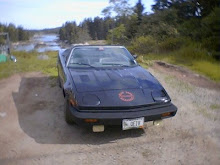
We loved the imagery of the lifestyle and we loved the cars themselves; they sold in far greater numbers here than they ever did in Great Britain. My first exciting drive was in an MGB-GT; while I drove it with care, the owner drove it with abandon just to show me what they could do. I pined away for one and finally, in 1968, bought my first Triumph Spitfire for $600. I've never been without a British sports car since then; now, it's a 1980 Triumph TR-7 Spider.
So it was no surprise to me that when the Boston Globe did a front page story [12/21/08] on the "connection" to the scam artist Bernard Madoff, a money manager named Robert Jaffee, they pictured him in his concours-level MG-TF, impeccably coiffed and dressed [he did not plan on getting greasy!]. The photo was first taken by the Palm Beach Daily News.
Two cheers for the new Duke of Deception.
One hallmark of Arthur's life was the possession of the sports cars of his era, from MG's to Jaguars. Turns out it was one of his first post-war purchases. In their time these largely British sports cars helped define visually the man who could afford carefree driving; if it required maintenance, there would be a mechanic on call or he would have the time to fix it himself. You could be your own country squire, the gentleman sportsman, right here in America.
We loved the imagery of the lifestyle and we loved the cars themselves; they sold in far greater numbers here than they ever did in Great Britain. My first exciting drive was in an MGB-GT; while I drove it with care, the owner drove it with abandon just to show me what they could do. I pined away for one and finally, in 1968, bought my first Triumph Spitfire for $600. I've never been without a British sports car since then; now, it's a 1980 Triumph TR-7 Spider.
So it was no surprise to me that when the Boston Globe did a front page story [12/21/08] on the "connection" to the scam artist Bernard Madoff, a money manager named Robert Jaffee, they pictured him in his concours-level MG-TF, impeccably coiffed and dressed [he did not plan on getting greasy!]. The photo was first taken by the Palm Beach Daily News.
Two cheers for the new Duke of Deception.
Sunday, December 21, 2008
Why I Love Winter
It's 4 days before Christmas and like a lot of the country, Maine lies underneath over a foot of snow. It will be a White Christmas The snow will continue all evening and throughout the night. I can hear the house moaning in the high winds. As this is an island town, there's no question that the ferry boats to the mainland will not run much of the day.
I have a cellar full of firewood and food that can be heated on the woodstove if necessary. I'm trying to get this blog finished before we lose power.
The driving is frightful right now, but earlier, heading out in either of my 1966 cars showed what enduring engineering is all about. The Corvair, with its rear engine, rear wheel drive, combines superb traction, excellent driver feedback and light weight to prove a great winter car. You always know, because you can feel it, where the wheels are planting themselves on every inch of roadway. With a wheelbase of only 108", you can feel any incipient skid and make corrections in plenty of time.
I drove around the very slippery, very windy roads here during the day, on a church run and a dump run, and felt in complete control the entire time. Unless the belly pan of the car high-centers on deep snow, it won't get stuck. All I'm running is ordinary snow tires on the rear, too.
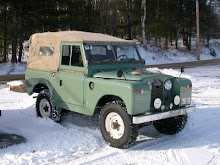
When I needed to get into the woods to get more firewood, it was easy with the Land Rover. With its superb gearing, it won't get stuck unless it high centers on a snowbank or drops into a snow covered ditch. The car only has an 88" wheelbase but it will carry a lot of firewood in its square dimensioned body.
These cars are 42 years old in construction and engineering, but because they do not try and isolate you from the road - they connect you instad - you know exactly what's happening on a winter's day. Precision and connectivity will win out over electronic aids any time - I wonder if GM or Land Rover are listening?
I have a cellar full of firewood and food that can be heated on the woodstove if necessary. I'm trying to get this blog finished before we lose power.
The driving is frightful right now, but earlier, heading out in either of my 1966 cars showed what enduring engineering is all about. The Corvair, with its rear engine, rear wheel drive, combines superb traction, excellent driver feedback and light weight to prove a great winter car. You always know, because you can feel it, where the wheels are planting themselves on every inch of roadway. With a wheelbase of only 108", you can feel any incipient skid and make corrections in plenty of time.
I drove around the very slippery, very windy roads here during the day, on a church run and a dump run, and felt in complete control the entire time. Unless the belly pan of the car high-centers on deep snow, it won't get stuck. All I'm running is ordinary snow tires on the rear, too.
When I needed to get into the woods to get more firewood, it was easy with the Land Rover. With its superb gearing, it won't get stuck unless it high centers on a snowbank or drops into a snow covered ditch. The car only has an 88" wheelbase but it will carry a lot of firewood in its square dimensioned body.
These cars are 42 years old in construction and engineering, but because they do not try and isolate you from the road - they connect you instad - you know exactly what's happening on a winter's day. Precision and connectivity will win out over electronic aids any time - I wonder if GM or Land Rover are listening?
Thursday, December 18, 2008
Britain Gets It Right
The government of Gordon Brown recognizes the importance of the automotive manufacturing industry to his country. Even though the number of British-based automobile companies is small, the number of plants - regardless of corporate ownership - is deemed important.
Jaguar and Land Rover are now a single company, owned by the Tata conglomerate in India. The merged corporate structure pays 15,000 workers a year; its collective impact on far more workers [sales, repair shops, parts manufacturers and retailers] is even larger.
Great Britain has led the world in seeking out effective solutions to the banking/lending crisis; indeed, it wasn't long after Secretary Paulson announced his $700 billion plan that the Brown government came up with an alternative plans. By all measures theirs has worked better than ours.
So I was not surprised to read that when Jaguar and Land Rover found that they needed support in this difficult automotive environment, their government listened and indeed appears ready to act. Meanwhile, Washington continues to suck air as it approaches the end of December - when GM and Chrysler will run out of funds.
Wednesday, December 17, 2008
So You Think That Detroit was Faking It?
So you - yes, you, Senate southern Republicans - think that Detroit is faking their financial distress? I don't thnk so.
You see, according to the Assoicated Press, all 30 Chrysler plants in the US will shut down this Friday and remain closed until January 19. That's a great way to conserve funds and reduce inventory. Of course, a lot of auto workers, blue collar and white collar, will no longer have the same paycheck or will go on unemployment. That should do wonders from strapped state unenployment funds.
Well, good thing that the Senate Republicans refused to be bamboozled by those Big 3 CEO's.Tuesday, December 16, 2008
Small Cars = Cheap Cars: Only in Detroit
Over the decades Detroit manufacturers have worked with the following equation: large cars = great cars, small cars = cheap cars. So no one really engineered or marketed a small car to be a great car.
Well, actually, by accident, Chevrolet did when they created my beloved Corvair. Without realizing it they made the Corvair a far better car - unibody, low stressed air cooled engine, superb styling in either early or late guise, great seating capacity - than other "compacts." But at the same time, they sought to sell it on low price alone. So the interiors were cheezy, a passenger side sun visor and heater were optional, marketing was aimed at economy, build quality in the later models was appalling, even by '60's standards, and so on.
But European manufacturers long ago recognized that the laws of physics affect automobiles, too. So why not make an elegant, superbly designed small car? They used the registration and tax laws to their advantage. If gas taxes are quite high [now about $3.80 per gallon according to the Boston Globe], why not make engines fuel efficient? Why not make 4-5-6 speed transmissions so those same engines can propel the cars to autobahn speeds? Since they'll be going much faster than Americans do on their highways, we'd better give them great suspensions and handling packages. And Europeans are less likely to own multiple cars so they made them with higher quality so they would last.
The European models that could not make it in the US were the Renault Dauphines and Fiat 500's, the economy cars with tiny engines [<1>
Well, actually, by accident, Chevrolet did when they created my beloved Corvair. Without realizing it they made the Corvair a far better car - unibody, low stressed air cooled engine, superb styling in either early or late guise, great seating capacity - than other "compacts." But at the same time, they sought to sell it on low price alone. So the interiors were cheezy, a passenger side sun visor and heater were optional, marketing was aimed at economy, build quality in the later models was appalling, even by '60's standards, and so on.
But European manufacturers long ago recognized that the laws of physics affect automobiles, too. So why not make an elegant, superbly designed small car? They used the registration and tax laws to their advantage. If gas taxes are quite high [now about $3.80 per gallon according to the Boston Globe], why not make engines fuel efficient? Why not make 4-5-6 speed transmissions so those same engines can propel the cars to autobahn speeds? Since they'll be going much faster than Americans do on their highways, we'd better give them great suspensions and handling packages. And Europeans are less likely to own multiple cars so they made them with higher quality so they would last.
The European models that could not make it in the US were the Renault Dauphines and Fiat 500's, the economy cars with tiny engines [<1>
Monday, December 15, 2008
After the Bailout
Thomas Friedman, the author and New York Times columnist, got it right in a recent column.
He wrote that "over the years Detroit bosses kept repeating: 'We have to make cars that people want.' That's why they're in trouble. Their job is to make the cars people don't know they want but will buy like crazy when they see them [italics from original article].
If Detroit's management recognizes the validity here, they could begin the rebirth after the bailout. When was the last time you turned to a Detroit-designed and engineered car and proclaimed, "I must have one of those!" Many is the time buyers have said "I must have a new car" and turned to other marques for their choice. Or worse yet for Detroit, they've said "show me you lowest price or best lease deal." In effect "I'll rent this car for the next 2 - 7 years" instead of investing in ownership.
If hybrid cars are your thing, a Chinese manufacturer now sells a $22,000 plug-in hybrid that will get 80 miles range on a charge and then a gas engine kicks in. For a lot of driving situations every day, 80 miles will be enough to run on electricity alone.
If, as I do, you live in northern New England, where power outages from ice and snow and wind storms are all too common, you might want to hold on the "plug in" until the electrical grid is more robust. That said, for fans in China they now have a car that they feel as though "they must have." So how come GM can't get the Volt out until at least 2010?
As Friedman wrote in yestersday's Sunday New York Times, "Walk through a lot of college campuses. You don't see many Buicks." Memo to GM: your future buyers, the ones who will fund your bailout through their taxes and lost savings, aren't interested in the marque you've identified as part of your "core product line.'
Subscribe to:
Posts (Atom)




 Posts
Posts

