LandRoverWriter.com

LandRoverWriter.com
The Land Rover Writer

Tuesday, March 27, 2012

Cloudy Memories

The mists of time cloud our memories about romance, particularly in the arenas of "women who have dumped you" and "cars I loved."

The latter came back to mind this morning with a quick glance at Hemmings' daily email blast. What made this most powerful was the presence of a light blue 1973 VW Super Beetle convertible. You see, I had a '74 convertible in the same color and ah, yes, I remember it fondly....


Not well, or I'd have forgotten the time in rural New York that it completely burned out its clutch, or the ever-spreading rust on a 5 year old car [!], the soulless interior, the instrumentation [none past a speedometer and gas gauge], the gutless acceleration, the wandering spirit on the highway.

What I do remember is that after a drought in British sports cars, this convertible reclaimed the open air driving I adored and coupled it with some reliability, good gas mileage, seating for four and great traction in the snow [I did live in Vermont, after all].

I had the car for two years before selling it to move back into a '63 MGB. That brought me back to the days of removing spark plugs to heat them up in the stove, cans of starting ether, an even more dubious heating systems. 

If my memories of the VW were cloudy, seeing this photo brought them back with some clarity. This owner wants $8,900 for his car; all I can say is "Thanks for the Memories."

Wednesday, March 21, 2012

Land Rover Celebrates its 25th Anniversary

Land Rover have been brought into the USA since the very early 1950's. The Rover Car Company lined up with US importers in different regions of the country. Both cars and Land Rovers entered the US market with, frankly, poor results in terms of sales.

Right from the beginning in 1948, Land Rovers found willing buyers in markets all over the world. Rover could never make that many of them so the 1,000 - 1,500 sales annually in the US didn't bother them much; they could sell all they could manufacture every year.

British Leyland's corporate ownership meant that Land Rovers now came directly through a British subsidiary, at least until 1974, when Land Rover left the US market because of safety and emissions requirements. That would change in 1987 when Land Rover established a US firm, Range Rover North America, to handle sales and service of the then 17-year old Range Rover.

This year Land Rover celebrates the 25th anniversary of its corporate presence in the USA. They're going to recreate the famous "Most Beautiful Vehicle in the World" ad campaign at the New York Auto Show in April. 

 They've created a video celebrating their 25 years and you can watch it here.


Behind the Braking Wheel

When the Land Rover received its state inspection sticker in February, it did so under the condition that I repair a leaking hub seal in the left rear wheel. 

At the same time, Todd, the local mechanic, noted that I also had a wobbly locating pin on the backing plate. The pin on the backing plate helps pivot the brake shoes under load; if it wobbles while braking, you'll get a lot of wear on one side only.


I called Rovers North for parts and sadly learned that tack welding the backing plate's pin requires precision that's unlikely to occur under shop conditions. Somewhere in their inventory they found a backing plate, an original one from Land Rover.

On a pleasant Saturday Todd and I began the process of removing all the brake parts from the rear wheel, as well as the floating axle. Then you had to remove the wheel bearings to get at the hub seal and race - those pieces are supposed to keep gear oil off the brakes.

Sadly, even though the rear brake shoes had lots of life left on them [they'd been replaced during the past year], they also had lots of congealed gear oil on them from the leak. It seemed unlikely I could clean them up so I asked Todd to drive me home where I knew I had another set. At the same time he said I should look for a brake spring to replace the broken one we found hanging free behind the brake drum. I found the shoes but I had no extra spring [we found one in a junk drawer in his shop].

With everything apart I set to cleaning off the grunge and grease, reinstalling all the parts and searching for a spring. In the meantime, Todd greased the wheel bearings and installed the new hub race and seal. He noticed that the wheel bearing had been set loosely on the hub, so afterwards I checked the tension on the opposite wheel and found that bearing loose, too. Once reset, we looked to install the brake drum and finish the job.

With the new shoes the drum would slide over the shoes but the wheel would barely turn. So we removed the drum and Todd turned the drum to take off any excess metal and wear points. It was still a hard turn by hand but the brake linings quickly wore into place under daily use.

Some 15+ years ago I tackled a similar set of jobs on my own, outdoors, when I discovered a leaking hub seal - only I had no idea what caused all the grease that filled the brake drum. The title of the article I wrote for the old Rovers North News was "The Brake Job From Hell." Fortunately this job went better.


Sunday, March 18, 2012

Corvair Brakes

For months now I've been bedeviled by an odd leak in the Corvair's [single cylinder] braking system. 

When driving the car, the brakes - which have received a lot of attention in the 5 years I've owned the car - had worked well. However, when the car sat at the ferry terminal for weeks at a a time, the brake fluid level at the master cylinder would be down, as if fluid had leaked out during the hiatus.

For a long time I just kept filling the reservoir and topped it up any time I used the car. Then I realized that the only place the brake system had residual pressure was at the master cylinder itself. The gnarly black carpet under the pedal would not show any leakage there [sometimes the fluid runs down the pedal], but the occasionally soft pedal under pressure did hint of an internal leak within the cylinder. 


The old cylinder didn't look that pretty anyway.
Clearly there had been some moisture in the fluid; the inside looked rusty.


The Corvair's master cylinder rests on two studs that protrude from the firewall; you just unbolt the cylinder and remove the short brake pipe from the bottom of the cylinder. 


Since the new cylinder came with its own bench bleed screw I figured this was a job I could do myself - but with the car on the mainland I needed to find a place to do the job. I called Jim Westervelt, who has his own lift in his garage, and knows Corvairs intimately, but medical problems had laid him up. A Land Rover buddy who works at East Coast Rover would not be there on my appointed day, so I contacted a shop in Warren, ME, and asked them to do the job for me.


The old one came out quickly but Copeland's said the new one leaked fluid when they tried to bench bleed the cylinder [bench bleeding removes air from the cylinder, reducing the amount of bleeding later]. A call to Clark's Corvair revealed that the master cylinder rod travel in the car would be much less then our hearty thrusts to purge air from the cylinder. Push lightly and for a short travel only, and all would be fine - and it was.


Copeland's broke a wheel cylinder bleed screw while bleeding the system, but within an hour, I had a new master cylinder and very good brakes. With new wheel cylinders and some new rubber lines, the system should be tight and safe now.


Old systems like the Corvairs had only one brake circuit, so if it failed, you had no brakes. All cars post-1968 have dual [now 4 in some cars] circuits so you'll always have some brakes.


Needless to say the car was an even greater joy to drive. As a bonus, Copeland's took a few moments to track back a brake light problem I've been having; it seems that I have a problem in the wiring to my directionals which also affects the brake lights. I have one for now, at least, and with luck, the second lamp will activate once I check out the directionals under the steering wheel.
 

Thursday, March 8, 2012

Some Day My Paint Job Will Come

Hemmings sends out a daily email with links to great posts and interesting vehicles for sale. Today's included this terrific '65 Corvair 140/PG.

I could not help but note the color is the same as my '66, well, the same as it came with as new. Right now mine is a pale imitation of this paint job.

Here's the link to the description of this car for sale. 

Some day mine will get a paint job that will make it look this good, but it will never run with the same power. This one is a 140/4 carb whereas I have only the 110/2 carb with a 4-speed.

Friday, March 2, 2012

Fiat Chooses an Abarth Spokesperson

He would not have been my first choice, even in jest, but Fiat has chosen Charlie Sheen to be a spokesperson for their tongue in cheek ads for the new Abarth model.


Take a look at their tv/internet ad here.

I must admit I'm partial to the original Fiat Abarth; the styling strikes me as more upfront, less boy racer. 

 Better yet, Charlie Sheen wouldn't have liked it.

"Oops, Never Mind"

To paraphrase Rosana Danadana, "Never mind."

NHTSA cannot produce its regulations in time for automakers to develop rear camera systems, so the federal agency has done what college students have done for decades - asked for an extension.

Sure, manufacturers know how to construct a center console screen and have it talk to a rear mounted camera. However, the legal profession, the regulators and the auto companies can't decide on just which mode of camera and notification will meet legal liability. Should the camera detect something behind the car, should it beep, or flash a message, or stop the car? How low to the ground should the detection device be mounted, or how high and wide should it scan? Should it be instantaneous with a shift into reverse? How do you engineer manual transmission cars to have this capability? What's the warranty and persona liability if the system fails? Do states have to alter their annual inspections to include this?

Interestingly, when Rolls Royce produced the Camargue in 1975, it installed a fiber optic telltale light and a "park assist control" to help new owners cope with its 16 ft 11 inch length and its 6 ft 3 inch width.  

Tuesday, February 28, 2012

My Rear End Camera

According to the New York Times the National Highway Transportation and Safety Administration [NHTSA] will mandate rear cameras for all passenger vehicles starting in 2014.

Rear view cameras are predicted to save the lives of 228 people - yes, 228 - that year. Most, but not all, will be be young children. 

The estimated cost to the auto industry will be $160 - $200 per car, some of which is bound to wind up with the consumer. 


As cars have striven to become "safer" in the event of crashes, designers have been forced to reduce the "greehouse," the area of windows within each car, which has now hampered rearward vision. Thus, in "solving" one issue, safety regulators have created another. Cars also continue to grow in dimensions and in weight, which makes heavy glass, less desirable. 


The last regulation of this sort was the "Libby Light," the third brake light named for Elizabeth Dole, a former Secretary of Transportation in the 1980's. That lamp works on the presumption that a person who won't pay attention to the two mandatory brake lights in front of them will pay attention to the third one, mounted higher on the rear of the car.


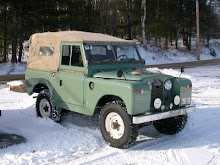
My '66 Land Rover has no such feature, just a large rear window and zero overhang in the rear of the car. When that window is too dirty to see out of safely, I must exit the car and clean off the window. Whew - what a chore that is! Why not drive around blind instead and enjoy my right to behave like an idiot?


When I'm running a canvas top in the summer, I often roll up the rear window to make certain I can see clearly out of the rear. 


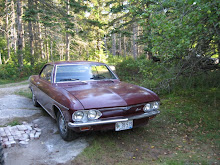
My '66 Corvair has a large greenhouse, especially in the rear. The rear end of the car [the engine end] slopes down out of view, so visualizing the rear of the car becomes an essential part of driving. I can see anything - like a person - behind me quite well, just not the end of the car. So I must carefully gauge my backing into a spot by getting out of the car to look - whew, what a chore that is! Why not back in blind and enjoy my right to behave like an idiot? 


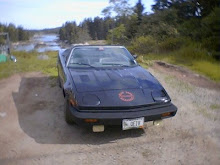
My '80 Triumph TR-7 has a "Kamm tail" rear end, one that chops off almost vertically. The rear window is large enough, and the car is low enough, to see anything behind the car. Since it's a British sports car it sits low to the ground, which makes entry and exit from the cockpit physically taxing at times - when, what a chore that is! Why not back in blind and enjoy my right to behave like an idiot.


So now, if I were foolish enough to buy a new car in 2014, I would be required to pay for a center dash console with a navigation system/screen/entertainment center/backup camera, all because someone can't be bothered to actually pay attention while driving. 


My rear end camera is a rear window, kept clean enough to see, and my willingness to actually turn around in the car and look behind me before backing up. 

Lunacy. 


Wednesday, February 22, 2012

The Return of the Wonderbra Bumper

British car fans from the 1970's will remember, with much pain, the creation of the rubber bumper "Wonderbras" that afflicted our beloved sports cars of that era. 

First came the MGB of 1975; in order for it to meet US safety regulations, it had to be jacked up in height and affixed with front and rear "rubber bumpers" in lieu of the stylish chrome items of earlier models.


That same year the MG Midget received its own version of the same bumpers; because of the car's 1962 design, it needed a less ugly version of those bumpers.

 A year later the Triumph TR-7 came standard with those same bumpers, this time integrated into the overall wedge shape.


The Triumph TR-6 avoided this only because Leyland ended production so as not to compete with the TR-7. The Triumph Spitfire's design, also from 1962, allowed it to get away with rubber bumper stops over chrome bumpers until the 1979 models [it would remain in production only through 1980].

While those sports cars hung on for dear life, most enthusiasts will rue the loss of minimal bumpers and considerable horsepower - due both to excess weight and strangled engines from emission controls.

I thought the worst of these excesses was over until I saw the latest Euro-Wrangler from Jeep in today's Autoweek. Take a look at these "pedestrian friendly" rubber bumpers; somebody at Fiat must have dipped into the Fiat 124 Spider archives to find these bumper designs for this European-only Jeep.


Thursday, February 16, 2012

It Passed - Sort Of

Inspection on Monday came on the heels of a matinee performance of "Annie Get Your Gun" [I was a singing/dancing cowboy], striking of the production, two EMS call outs and one ferry ride with a patient that night.

So yawning a lot I slowly drove the the local garage where Todd, the mechanic/owner, waited for the Land Rover. He showed genuine surprise when both directional lights worked, and then wandered around the back to look at the rear lamps. Being a British car, the license plate lamp did not illuminate; fortunately it needed only new peanut bulbs to restore proper lighting. 


Underneath the car the steering and suspension systems looked great until he stared at the front springs. Once again he found the u-bolts that hold the axle in place loose. We've both tightened these a few times over the years, which puzzles the mechanic, me, and Rovers North, who've not heard of these u-bolts loosening up. Fortunately I had purchased a set of 4 u-bolts from Rovers North as backups when the same problem arose in the past. A friend gave me a ride to my storage and even better, I actually found them!


Once he installed the u-bolts he stared at the rust covering the exhaust system and pronounced it "fine for now," but likely to fail shortly [i.e., within the 1 year inspection period]. He also found hypoid oil dripping from behind the brake backing plates in the rear, and found one locating pin loose in the backing plate. So I ordered new hub seals and a backing plate [that must come from the UK], and of course, a new exhaust system. The header pipe on Land Rovers bolt to studs that screw into the exhaust manifold, so I ordered new studs and brass nuts [so they hopefully won't corrode in the future], too.


Satisfied with my orders, the mechanic gave the QE I its 2012 inspection sticker. He'll help me install the new parts later this month.


Now comes the real fun at the Maine Winter Romp this weekend. Off roading!!