LandRoverWriter.com

LandRoverWriter.com
The Land Rover Writer

Thursday, March 8, 2012

Some Day My Paint Job Will Come

Hemmings sends out a daily email with links to great posts and interesting vehicles for sale. Today's included this terrific '65 Corvair 140/PG.

I could not help but note the color is the same as my '66, well, the same as it came with as new. Right now mine is a pale imitation of this paint job.

Here's the link to the description of this car for sale. 

Some day mine will get a paint job that will make it look this good, but it will never run with the same power. This one is a 140/4 carb whereas I have only the 110/2 carb with a 4-speed.

Friday, March 2, 2012

Fiat Chooses an Abarth Spokesperson

He would not have been my first choice, even in jest, but Fiat has chosen Charlie Sheen to be a spokesperson for their tongue in cheek ads for the new Abarth model.


Take a look at their tv/internet ad here.

I must admit I'm partial to the original Fiat Abarth; the styling strikes me as more upfront, less boy racer. 

 Better yet, Charlie Sheen wouldn't have liked it.

"Oops, Never Mind"

To paraphrase Rosana Danadana, "Never mind."

NHTSA cannot produce its regulations in time for automakers to develop rear camera systems, so the federal agency has done what college students have done for decades - asked for an extension.

Sure, manufacturers know how to construct a center console screen and have it talk to a rear mounted camera. However, the legal profession, the regulators and the auto companies can't decide on just which mode of camera and notification will meet legal liability. Should the camera detect something behind the car, should it beep, or flash a message, or stop the car? How low to the ground should the detection device be mounted, or how high and wide should it scan? Should it be instantaneous with a shift into reverse? How do you engineer manual transmission cars to have this capability? What's the warranty and persona liability if the system fails? Do states have to alter their annual inspections to include this?

Interestingly, when Rolls Royce produced the Camargue in 1975, it installed a fiber optic telltale light and a "park assist control" to help new owners cope with its 16 ft 11 inch length and its 6 ft 3 inch width.  

Tuesday, February 28, 2012

My Rear End Camera

According to the New York Times the National Highway Transportation and Safety Administration [NHTSA] will mandate rear cameras for all passenger vehicles starting in 2014.

Rear view cameras are predicted to save the lives of 228 people - yes, 228 - that year. Most, but not all, will be be young children. 

The estimated cost to the auto industry will be $160 - $200 per car, some of which is bound to wind up with the consumer. 


As cars have striven to become "safer" in the event of crashes, designers have been forced to reduce the "greehouse," the area of windows within each car, which has now hampered rearward vision. Thus, in "solving" one issue, safety regulators have created another. Cars also continue to grow in dimensions and in weight, which makes heavy glass, less desirable. 


The last regulation of this sort was the "Libby Light," the third brake light named for Elizabeth Dole, a former Secretary of Transportation in the 1980's. That lamp works on the presumption that a person who won't pay attention to the two mandatory brake lights in front of them will pay attention to the third one, mounted higher on the rear of the car.


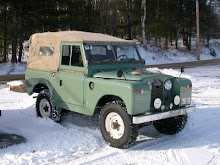
My '66 Land Rover has no such feature, just a large rear window and zero overhang in the rear of the car. When that window is too dirty to see out of safely, I must exit the car and clean off the window. Whew - what a chore that is! Why not drive around blind instead and enjoy my right to behave like an idiot?


When I'm running a canvas top in the summer, I often roll up the rear window to make certain I can see clearly out of the rear. 


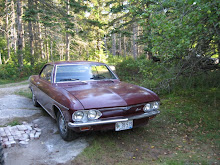
My '66 Corvair has a large greenhouse, especially in the rear. The rear end of the car [the engine end] slopes down out of view, so visualizing the rear of the car becomes an essential part of driving. I can see anything - like a person - behind me quite well, just not the end of the car. So I must carefully gauge my backing into a spot by getting out of the car to look - whew, what a chore that is! Why not back in blind and enjoy my right to behave like an idiot? 


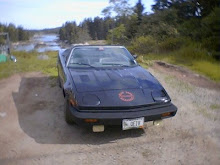
My '80 Triumph TR-7 has a "Kamm tail" rear end, one that chops off almost vertically. The rear window is large enough, and the car is low enough, to see anything behind the car. Since it's a British sports car it sits low to the ground, which makes entry and exit from the cockpit physically taxing at times - when, what a chore that is! Why not back in blind and enjoy my right to behave like an idiot.


So now, if I were foolish enough to buy a new car in 2014, I would be required to pay for a center dash console with a navigation system/screen/entertainment center/backup camera, all because someone can't be bothered to actually pay attention while driving. 


My rear end camera is a rear window, kept clean enough to see, and my willingness to actually turn around in the car and look behind me before backing up. 

Lunacy. 


Wednesday, February 22, 2012

The Return of the Wonderbra Bumper

British car fans from the 1970's will remember, with much pain, the creation of the rubber bumper "Wonderbras" that afflicted our beloved sports cars of that era. 

First came the MGB of 1975; in order for it to meet US safety regulations, it had to be jacked up in height and affixed with front and rear "rubber bumpers" in lieu of the stylish chrome items of earlier models.


That same year the MG Midget received its own version of the same bumpers; because of the car's 1962 design, it needed a less ugly version of those bumpers.

 A year later the Triumph TR-7 came standard with those same bumpers, this time integrated into the overall wedge shape.


The Triumph TR-6 avoided this only because Leyland ended production so as not to compete with the TR-7. The Triumph Spitfire's design, also from 1962, allowed it to get away with rubber bumper stops over chrome bumpers until the 1979 models [it would remain in production only through 1980].

While those sports cars hung on for dear life, most enthusiasts will rue the loss of minimal bumpers and considerable horsepower - due both to excess weight and strangled engines from emission controls.

I thought the worst of these excesses was over until I saw the latest Euro-Wrangler from Jeep in today's Autoweek. Take a look at these "pedestrian friendly" rubber bumpers; somebody at Fiat must have dipped into the Fiat 124 Spider archives to find these bumper designs for this European-only Jeep.


Thursday, February 16, 2012

It Passed - Sort Of

Inspection on Monday came on the heels of a matinee performance of "Annie Get Your Gun" [I was a singing/dancing cowboy], striking of the production, two EMS call outs and one ferry ride with a patient that night.

So yawning a lot I slowly drove the the local garage where Todd, the mechanic/owner, waited for the Land Rover. He showed genuine surprise when both directional lights worked, and then wandered around the back to look at the rear lamps. Being a British car, the license plate lamp did not illuminate; fortunately it needed only new peanut bulbs to restore proper lighting. 


Underneath the car the steering and suspension systems looked great until he stared at the front springs. Once again he found the u-bolts that hold the axle in place loose. We've both tightened these a few times over the years, which puzzles the mechanic, me, and Rovers North, who've not heard of these u-bolts loosening up. Fortunately I had purchased a set of 4 u-bolts from Rovers North as backups when the same problem arose in the past. A friend gave me a ride to my storage and even better, I actually found them!


Once he installed the u-bolts he stared at the rust covering the exhaust system and pronounced it "fine for now," but likely to fail shortly [i.e., within the 1 year inspection period]. He also found hypoid oil dripping from behind the brake backing plates in the rear, and found one locating pin loose in the backing plate. So I ordered new hub seals and a backing plate [that must come from the UK], and of course, a new exhaust system. The header pipe on Land Rovers bolt to studs that screw into the exhaust manifold, so I ordered new studs and brass nuts [so they hopefully won't corrode in the future], too.


Satisfied with my orders, the mechanic gave the QE I its 2012 inspection sticker. He'll help me install the new parts later this month.


Now comes the real fun at the Maine Winter Romp this weekend. Off roading!!


Thursday, February 9, 2012

The Dreaded Inspection

Few events raise terror to the classic driver as effectively as the annual inspection. Somehow I manipulated my inspection so it occurs during the winter, the worst possible time of the year. Actually, mine is next week.

Maine's required inspection doesn't differ greatly from those of other states: tire tread depth and condition, working lights, directionals, horns, wipers/washers, seat belts, brakes, suspension and structural rust.

So today I finally decided to check out the simple stuff - taillights and directionals. All went great until I noticed the left front directional lamp. Nope, no illumination there - so off came the amber lens only to see rust, and lots of it. Sure enough, the entire socket had rusted away. I couldn't even remove the bulb.

Only by breaking the glass could I remove the bulb and that's when I realized the socket had dissolved in a year's worth of water and salt. I got on the phone quickly and Rovers North had one in stock; it should arrive tomorrow.

The rusted and rounded exhaust header nuts will be a bigger problem. I was able to spray a great deal of rust-buster all over the nuts but still they won't budge. If I try and force them with a breaker bar, they will, well, break. I do have a used exhaust manifold so possibly I can just sway it out in a pinch.

Inspection comes on Monday, and I have another two weeks to work on the car before the sticker runs out. On the island, an expired sticker does not present a major problem; with only one garage on the island, the deputy has to be generous with time for repairs. This might limit trips to the mainland, though.


Wednesday, February 8, 2012

Preparations for the Maine Winter Romp

The Maine Winter Romp started in the mid-90's to fill a need; what do you do with your Land Rover in the winter?

Off road events had been held throughout the country in the spring, summer and fall, but there were few opportunities to tackle the trails in the winter months.

Bruce Fowler, Unity ME, a serial Series Land Rover owner and driver, owned lots of acreage of fields and streams himself, and had lots of neighbors with their own land. Suddenly enthusiasts had hundreds of acres of logging roads and snowmobiling trails on which to test their skills.

From a handful of Series Land Rovers in the early years to nearly 100 vehicles and hundreds more enthusiasts today, the event has become a winter holiday on the northeastern enthusiast. This year, the Winter Romp runs from February 17 - 20 and promises to be as much fun as ever.

The hardiest enthusiasts will "winter camp" on Bruce's property. Coddled enthusiasts will take rooms at the "official hotel," the regally named Waterville Grand Hotel, in nearby Waterville, ME.

Enthusiasts have driven Land Rover Defenders from Washington, DC and Virginia. One former New Englander boarded a plane in Nashville and hitched a ride to the Romp. There's a Canadian contingent from Ottawa and the Maritimes who attend every year. 

My Rover was last tuned up in early December but I'll try and mooch use of the electric company's line crew garage to check out the car. I'd like to tighten up the exhaust header, check out the clutch [not very effective] and the points/timing to get the most torque for off roading.


Carlos Melo, Bronx, NY, watches over me as I dump air from my tires for the off road portion: 12- 15 psi is really an effective range. 

There's rumor that Rovers North will attend in the new "company" Range Rover Evoque; it will be interesting the see the enthusiast response to this newest Range Rover.You can read about the Evoque in the upcoming issue of Rovers Magazine.


Friday, February 3, 2012

Disappearing Brake Fluid

While the Monza remained a delight to drive, it did exhibit an odd behavior. Any time the car sat for a while at the ferry terminal on the mainland, it seemed to lose brake fluid in the master cylinder reservoir. 


Normally, on a single circuit drum brake system, you lose brake fluid through leaks in the wheel cylinders or at a line. If it's at the wheel cylinder then the fluid leaks onto the drum, the shoe slides and the brake seems to grab or lock up. If it's a line the fluid level goes down only when you push on the pedal.
This time, the fluid level decreased just from sitting. Since the master cylinder is the only part of the system with constant pressure, it had to be a master cylinder leak.

Again normally, the master cylinder shows a leak by slowly having the pedal go to the floor under braking. If it's an internal leak [the more common] you don't lose fluid as the fluid simply pushes through the internal seals. 

This time is clearly different but all the experts agree the leak is in the pushrod seal of the master cylinder. Only two nuts, accessible through the front trunk, hold the master cylinder in place, so the job should be easy [!]. Bench bleed the cylinder, install a new line from the cylinder to the block connector, tighten up the nuts, and that should be it. Hopefully I can get to the mainland next week to complete the job.

Thursday, January 26, 2012

Sublime Experience

A classic car, specifically my '66 Corvair Monza, need not be a trailer queen in appearance or a full mechanical rebuild in condition to provide a sublime driving experience. You don't even need to go very far. For me the first step required a 1 hr 20 minute ferry ride to the mainland terminal in Rockland, ME, to get my Corvair. 


For the past several months it has sat outdoors in the ferry parking lot as a "mainland car." This role had been served by my '80 Triumph TR-7, but after a water pump failure and a head gasket leak repair, it needs more attention before it can regain that responsibility.

If the TR-7 demonstrated that a skilled engineer like Spen King could take conventional components, like front engine/rear wheel drive, solid rear axle and coil springs, and produce a good handling sports car, the Corvair demonstrated that a team of suspension engineers could produce an unconventional, rear engine/rear wheel drive, fully independent rear suspension, sporting car. The fact that the TR-7, particularly in its 5-speed iteration, proved to be a comfortable car for highway travel was a bonus. The Corvair had to provide highway comfort and sports car handling to satisfy its wider buyer market - which is why I appreciate the Corvair so much.

Stepping off the ferry I admit to some concern as to whether the Corvair would actually start, given that the last time I visited this car one month ago I found the battery quite dead. In fact, after jump starting the car with a battery pack, I had to park it on a slight incline with plenty of "push" room in case it would require a push start later [it didn't]. So I purchased and installed a new battery and then let it sit for another month. 

Happily, the car fired right up in the warmish 40 degree temperature and then proceeded to entertain me for the afternoon. It took me to get a haircut, purchase coffee beans [unavailable at the island market] and then stop for coffee and a late afternoon lunch at an empty if nifty Rockland restaurant. There the Corvair parked outside delighted the young waitresses. 

The actual time behind the wheel was less than one hour, but the experience filled the day. The thin windshield pillars and frameless windows brightened the interior. Rolling down the window let the relative warmth flood the car. The thin steering wheel felt delicate but the bite around corners felt anything but delicate. With its Clark's-rebuilt twin carbs, set up and balanced by ear by Jim Westervelt, the Monza idled smoothly and accelerated smartly. 

I thought back to Robert Cumberford's "RIP Corvair" essay in Car & Driver [August, 1969], lambasting GM for killing off the car:


"Have you driven one of these cars?...Do you appreciate how seductive the '65-'69 machine really was? Have you ever driver an American car with pleasant manual steering? With powerful non-servo brakes? With soft suspension and side bite?" 


Yup - just yesterday, and he's right!